

About Dr. Amie
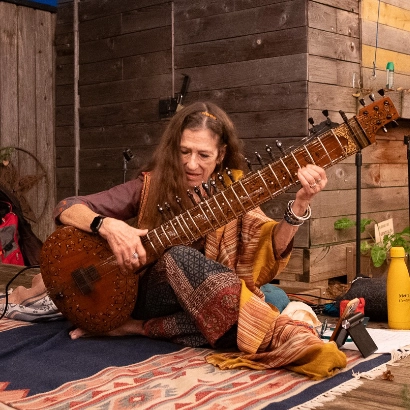
Internationally acclaimed sitarist/teaching artist/public ethnomusicologist Dr. Amie Maciszewski’s vision is to create and inhabit spaces where music and all the arts—performing, visual, literary, plastic, media—weave together like threads of the same narrative—for the greater good of humanity and the planet. She creates performance pieces, many of them collaborative, reflecting this interdisciplinary viewpoint.
She has spent nearly five decades studying, researching, performing, teaching, and sharing South Asia’s music and culture. She has performed extensively in North America, India, Pakistan, Europe, Japan; taught on faculties; conducted some 200 residencies/workshops; led South Asian music/culture ensembles at dozens of universities, schools, museums/cultural centers, festivals, senior facilities; and released three CDs.
Amie trained immersively for a decade in Santiniketan, India, principally under late Pandit Suresh Misra while earning B.Mus. (Gold Medalist) and M.Mus. (Merit Scholar) degrees in Hindustani instrumental music/sitar. She continued for the next two decades with intermittent immersive training mainly in Kolkata under the late Grammy-nominated Ustad Aashish Khan and the late vocal legend Padmavibhushan Girija Devi. Thus, Amie brings the authenticity of deep cultural experience and connection to her musical offerings, including proficiency in Bengali-Hindi-Urdu.
She founded (2006) and leads the collective Sangeet Millennium Ensemble, a fluid configuration of musicians (and sometimes guest dancers) who create collaborative performances of traditional Hindustani and world fusion music. The Ensemble was selected among the “Texas Top Ten” world music bands by the Austin Chronicle Readers Poll (2010-11). In 2024, Texas State Representative Salman Bhojani recognized Sangeet Millennium Ensemble for their contribution to cultural life in Dallas.
Supporters of Amie’s work include NM Arts Division, City of Austin Cultural Arts Division, City of Dallas Office of Arts & Culture, Texas Commission on the Arts, Mid-America Arts Alliance, Teatro Dallas, and AT&T Performing Arts Center. She has been awarded City of Dallas OAC Arts Activate grants annually since 2017 and Culture of Value grants each time they were offered: 2020, 2023, 2024, and 2025. For her cross-cultural contributions through music she received the Gandharva Award from Hindustani Arts/Music Society (Burdwan, India, 2014); selection by the US Consulate/Lahore (Pakistan) Office of Public Affairs for a Cultural Diplomacy tour as a sitarist and teaching artist (2016); and felicitation from Lahore (Pakistan) Mozang Rotary Club (2016), University of Alberta Canadian Centre for Ethnomusicology (2002), and City of Austin Cultural Arts Division’s “We All Belong” initiative (2023, 2024).
A PhD in Ethnomusicology (University of Texas/Austin), a Killam Postdoctoral Fellow (University of Alberta) and a noted public ethnomusicologist, Amie is a two-time Fulbright awardee (1995-96, 2022-25). She has conducted extensive field research in India since the 1990s, focusing on women musicians and dancers, particularly the marginalized entertainers. She has produced/directed three ethnographic films (two of them award-winning) documenting her research in India and has published numerous scholarly articles and book chapters on the topic (most recently in Morelli and Sherinian, eds., 2024). Since 2018, she has been researching folk performance traditions in Pakistan as indigenous knowledge, intersectional eco-cultural sustainability in the face of climate change, and an antidote to extremism (chapter in LaRue and Romero, eds., 2025; article in Sethi, Sarkar, et al, eds., 2026). Her most recent research is supported by the UCLA Ethnomusicology Department (2024-).
My Role as a Cultural Mediator
I have chosen the lifelong study of the complex and diverse music culture of the Indian subcontinent because I believe that understanding one culture in depth will facilitate understanding of and appreciation for other cultures.

Intercultural communication is and has always been an integral part of my (Amie Maciszewski’s) life. Growing up in rural New Mexico in a Polish immigrant family, I was exposed from infancy to at least three cultures and languages.
Because I was bilingual in Polish and English, it was relatively easy for me to acquire a level of proficiency in Spanish and French by the time I was a teenager. This instilled in me not only a deep curiosity about and appreciation of diversity but also a keen awareness of social inequality. Thus, as a youth I began my lifelong quest to grasp the nuances of very different cultures found in their respective expressive traditions.
After completing my university studies in anthropology and music at University of New Mexico, I set out to experience the cultures I was reading about, traveling overland to India in 1976. My prior exposure to the music of the Indian subcontinent consisted of recordings of the Beatles and other pop musicians experimenting with Indian instruments for “exotic” sound-bytes and Ravi Shankar’s pioneering work in introducing Indian classical music to the west. I thought I would dabble in learning sitar.
But once I reached India and experienced the sound of sitar live for the first time in a touristy sitar shop in Benares, India – I was spellbound. It was an entire shift in consciousness, and I have not looked back since. In my four decades plus of close association with the Indian subcontinent and its people and culture, I have acquired fluency in Bengali, and proficiency in Hindi as well as in spoken Urdu.
Thus, my role is that of a cultural mediator between music makers and performing artists of diverse communities, academia, and the public sector. In other words, I advocate for an interdisciplinary approach to the study and practice of musics around the world as an exercise in cultural connectedness.

My Gurus

The Late Padmavibhushan Dr. Girija Devi
“Amelia is a very sincere and dedicated disciple of mine whose deep interest in Hindustani music has led to notable undertanding, accomplishment and professionalism as a vocal instructor and sitar performer.”
Sarode Maestro Ustad Aashish Khan
“Amelia is one of my most hard working, sincere, and dedicated students. She realizes how deep and spiritual our music is and always tries to convey that in her performance and teaching. She is a very accomplished performer on sitar and a fine teacher and ensemble director of both instrumental and vocal music.”

My Research
I am an ethnomusicologist specializing in the music cultures of South Asia. As a scholar advocating the study of world musics as an important means of promoting intersectional justice (and ultimately, peace) through raising understanding of and respect for the diversity of human expression, my theoretical underpinnings and action research overlap with:
- Feminist studies, particularly gender and music/performance
- Issues in ethnography and fieldwork, particularly the ethnography of expressive culture
- South Asian Studies, music and social/environmental justice, cultural sustainability, music for advocacy
- Documentary/ethnographic film, critical/cultural studies of music.
I conducted research on the courtesan performers of North India, known as tawaif or baiji, between 1994 and 2021. I primarily used ethnographic methodology such as interaction and interviews with members of the community and documentation through recording and point-of-view documentary films. I have published articles and made films about various aspects of their lives, social relations, historical trajectories, the production and reproduction of their music, the role of media in the lives of lesser-known tawaifs, and the constraints that have disrupted their careers. In the process, I became involved in advocacy work to support the community. This research was supported in part by grants from Fulbright IIE, Killam Postdoctoral Fellowship, University of Alberta, University of Pittsburgh’s Center for Asian Studies, and Social Science and Humanities Research Council of Canada.

Between 2010 and 2014, I worked as part of a team conducting a study of the pedagogy and philosophy of senior Gurus, including my own vocal guru, Padma Vibhushan Girija Devi, at the ITC Sangeet Research Academy/Kolkata Kolkata, India, supported by the institution.
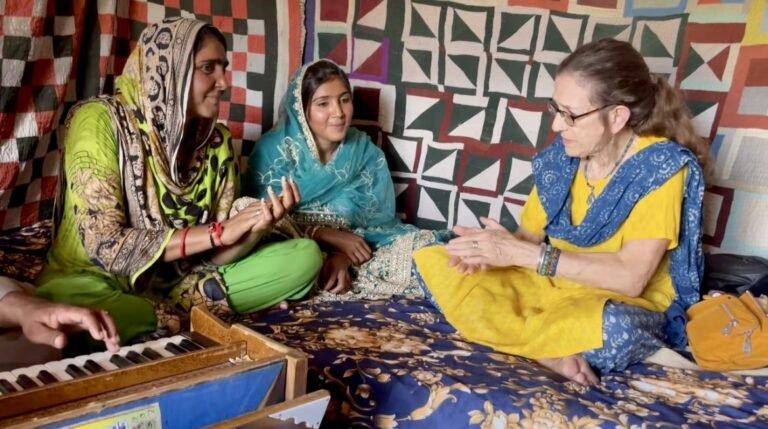
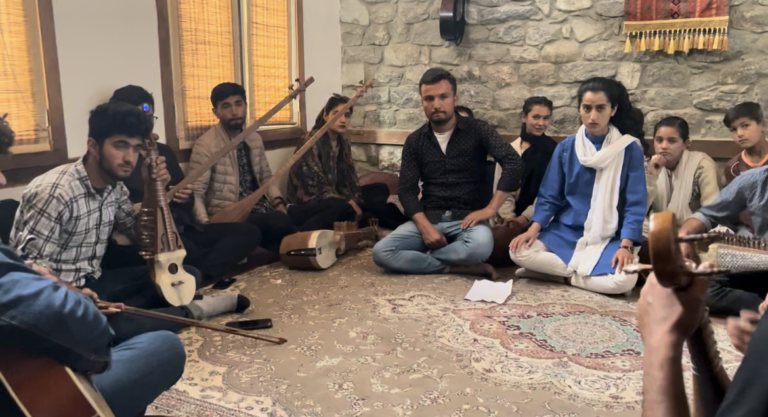
Since 2016, I have been researching the challenges and flows in the sustainability of traditional musics in Pakistan as music makers navigate the baffling incongruities between attenuation of regional difference through the globalized media, obstacles created by religious extremism, pockets of cultural amnesia, and grassroots revitalization of regional diversity.


My Writing
My earlier writings have focused on examining the history and current issues facing socially marginalized musicians, specifically courtesans in India and Pakistan, through feminist ethnography and oral history and analyzing the relationship between gender and genre in performance, transmission, and literature.
In my current writing, I am focusing on challenges to musical, cultural, and environmental sustainability among underserved communities in Pakistan, specifically Hunza and Sindh.

My theoretical and ethnographic orientation are concentrated around:
Unpacking, through feminist ethnography and oral history, the historiography of socially marginalized musicians from the late colonial period through the present day , especially the diffuse community of courtesans in India, referred to as tawaif-s in the North and devadasi-s in the South.
Identifying and examining issues of women’s rights, human rights, and sustainability in the flows of transmission and patronage of diverse musics and musicians in North India and Pakistan (particularly socially marginalized traditional performers, including courtesans and their communities in North India and folk musicians from underserved communities in various localities in Pakistan)– from the local to the global.
Critical examination and interpretation of the complex relationship between gender, caste, class, genre, and visibility in performance practice, transmission, and literature;
Action research and culture-brokering on behalf of the abovementioned musicians’ communities through teaching, writing, performing, and ethnographic films.
Reflexive interrogation of the use of performance practice and study as a tool for research and re-presentation–with my own Hindustani music ensemble work, private instruction, and performance practice; as well as with the above-mentioned communities.
My Films
I have produced four films documenting my ethnographic research since 1994 on socially marginalized women musicians in North India.


Disrupted Divas: Conflicting Pathways
For low-status women entertainers in India, survival means tough decisions– sometimes with heartbreaking consequences.
A Documentary by Dr. Amie Maciszewski & Ms. Mars.
Chandni’s Choice
Juried screenings at Asia-Texas [Austin] and Indo-American Arts Council [New York City] Film Festivals, 2007; Yellow Frames [ Delhi] Film Festival, 2009
Guria, Gossip, Globalization
Special Jury Award, Dallas South Asian Film Festival, 2004; invited screenings include Columbia, Pittsburgh, Carnegie-Mellon, Princeton Universities, U of Arizona, Arizona State U, MIT, and Wheaton College, Austin Asian Film Festival (2004); India Habitat Centre, Delhi, Center for Social Science Studies, Calcutta
Our Stories, Our Songs: North Indian Women’s Musical Autobiographies
Featured in International Women’s Day 2000 Media Festival, Austin, TX
My CV
View & download my CV, which includes:
- Education
- Teaching & Workshop Facilitation Experience
- Performance & Ensemble Leading Experience
- Teaching Artist Experience
- Conferences & Presentations
- Publications
- Films & Film Scores
- CD Recordings
- Languages & Interpreting Fluencies
- Advocacy & Community Service Projects